From 9 to 20 November 2026, Antalya, Turkey. It brings together the signatory countries of the United Nations Framework Convention on Climate Change.
Each year, the COP reviews the national communications and emissions inventories submitted by the Parties to assess progress towards the objectives of the Convention.
Alongside the negotiations, Türkiye and Australia, as partner country, have launched the COP31 Action Agenda. It is built around ten priority themes, one of which is dedicated to “Zero Waste and Methane Emissions Reduction”. Methane and waste will therefore have a prominent place on the agenda in Antalya.
FSWP calls for waste management to be integrated into local and national climate plans. Reducing the sector’s emissions also brings benefits for health, resources, urban resilience and jobs, and contributes to the Sustainable Development Goals.
Prevent waste. Prevention offers the greatest mitigation potential, with 15 to 25% [1] of global greenhouse gas emissions. It relies on the transition to a circular economy: sufficiency, eco-design, reuse and the fight against food waste.
Collect everywhere and for everyone.2.7 billion [2] people still lack access to waste collection. Universal collection would also strengthen cities’ resilience to flooding.
End waste mismanagement. Closing open dumps and uncontrolled landfills would reduce methane emissions by 80% [3].
Recover materials and energy. Source separation enables the recycling of different waste streams and diverts organic waste from landfill through composting and anaerobic digestion.
Improve landfills. Even with volumes reduced through prevention, they remain essential for non-recoverable waste.
These actions rely on the four enablers of the Global Push initiative: regulation and planning, inclusion of all stakeholders, sustainable financing, and measurement, reporting and verification.
Focus on methane
Methane is responsible for around 30% of global warming to date [4]. Because it only remains in the atmosphere for about a decade, cutting its emissions has a rapid effect on the climate, and the waste sector is one of the most immediate levers.
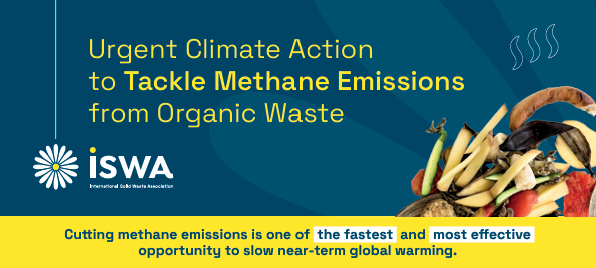
To accompany this note, FSWP, in partnership with the International Solid Waste Association (ISWA), has created an infographic in consultation with the Household Waste Partnership (HWP) of the Basel Convention, the Global Methane Hub (GMH), the World Biogas Association (WBA) and the Climate and Clean Air Coalition (CCAC). Designed for decision-makers and national delegations, it sets out the urgent actions needed to cut methane emissions from organic waste: preventing food loss and waste, phasing out open dumping and uncontrolled landfills, capturing methane from engineered landfills, and building circular, low-methane urban waste systems.
– Tuesday 10 November 2026, 15:30–16:30 - Malaysia Pavilion, Blue Zone From Waste to Opportunity: Advancing Zero Waste for Lower Emissions and Resilient Cities Organiser: Zero Waste Foundation – FSWP represented by Estelle Brachlianoff, CEO, Veolia
– Wednesday 11 November 2026, 11:30–13:00 - France Pavilion, Blue Zone The Circular Economy in the Mediterranean—Accelerating Scaling Up Through Cooperation Organiser: Circe.Med
– Wednesday 11 November 2026, 17:00–18:00 - Health Pavilion, Blue Zone Zero Waste, Healthy Planet – Circularity Without Harm Organisers: FSWP, ISWA, Zero Waste Europe
– Thursday 12 November 2026, 13:00–14:00 - Francophonie Pavilion, Blue Zone Circe.Med, the circular economy network working toward a Mediterranean region that sets an example in the fight against plastic pollution and climate change Organiser: Circe.Med
– Saturday 14 November 2026, 15:50–16:50 - Zero Waste Pavilion, Blue Zone Circular Waste and Resources Management towards a zero waste future Organisers: FSWP, ISWA
– Monday 16 November 2026, 17:15–18:00 - France Pavilion, Blue Zone The Waste Sector to deliver Climate and “One Health” Benefits Organisers: FSWP, ISWA, BRS Conventions
– Tuesday 17 November 2026, time TBC - Ghana Pavilion, Blue Zone The Global Push: a common direction for resources and waste management Organisers: FSWP, Ministry of Cities, Ghana
– Wednesday 18 November 2026, 11:30–12:30 - Water for Climate Pavilion, Blue Zone Where waste meets water: Joint mitigation actions from solid waste and wastewater Organisers: FSWP, ISWA, BRS Conventions
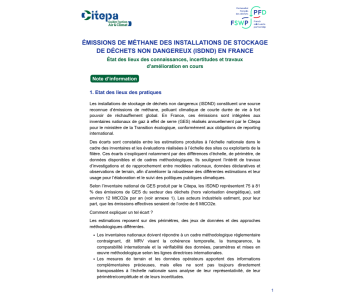
– Wednesday 18 November 2026, 15:45–16:45 - France Pavilion, Blue Zone From measure to action: methane data driving landfill emissions reduction Organisers: ADEME, Suez, Waga Energy, FNADE, Citepa, ISWA
– Thursday 19 November 2026, time TBC - Ghana Pavilion, Blue Zone Financing the shift: waste as a climate lever for African cities Organisers: FSWP, Ministry of Cities, Ghana
Further events may be announced soon.
Know-how projects
For this COP, FSWP has prepared a presentation setting out its message on the waste sector’s contribution to climate action. It brings together key figures on the sector’s emissions and mitigation potential, along with a selection of know-how factsheets showcasing French expertise.
[idem]] milliards de personnes n’ont toujours pas accès à la collecte des déchets. Mettre en place une collecte universelle renforcerait également la résilience des villes face aux inondations.
Mettre fin à la mauvaise gestion des déchets. Fermer les décharges sauvages et non contrôlées réduirait les émissions de méthane de 80 % [5].
Valoriser la matière et l’énergie. Le tri à la source permet de recycler les différents flux et de détourner les déchets organiques de l’enfouissement, grâce au compostage et à la méthanisation.
Améliorer les centres d’enfouissement. Même réduits grâce à la prévention, ils restent indispensables pour les déchets non valorisables.
Ces actions reposent sur les quatre leviers de l’initiative Global Push : réglementation et planification, inclusion de toutes les parties prenantes, financement durable, et mesure, rapportage et vérification.
Le méthane est responsable d’environ 30 % [6] du réchauffement climatique actuel. Comme il ne reste qu’une dizaine d’années dans l’atmosphère, réduire ses émissions a un effet rapide sur le climat, et le secteur des déchets est l’un des leviers les plus immédiats.
Pour accompagner cette note, le PFD, en partenariat avec l’International Solid Waste Association (ISWA), a réalisé une infographie en concertation avec le Household Waste Partnership (HWP) de la Convention de Bâle, le Global Methane Hub (GMH), la World Biogas Association (WBA) et la Coalition pour le climat et l’air pur (CCAC). Destinée aux décideurs et aux délégations nationales, elle présente les actions urgentes pour réduire les émissions de méthane des déchets organiques : prévenir les pertes et gaspillages alimentaires, mettre fin aux décharges sauvages et non contrôlées, capter le méthane des centres d’enfouissement et développer des systèmes urbains circulaires et faible en émissions de méthane.
– Mardi 10 novembre 2026, 15h30–16h30 - Pavillon de la Malaisie, zone bleue Faire des déchets une opportunité : promouvoir le zéro déchet pour réduire les émissions et renforcer la résilience des villes Organisateur : Zero Waste Foundation – le PFD sera représenté par Estelle Brachlianoff, directrice générale de Veolia
– Mercredi 11 novembre 2026, 11h30–13h - Pavillon France, zone bleue Économie circulaire en Méditerranée : accélérer le passage à l’échelle grâce à la coopération Organisateur : Circe.Med
– Mercredi 11 novembre 2026, 17h–18h - Pavillon Santé, zone bleue Zéro déchet, planète en bonne santé : une circularité sans danger Organisateurs : PFD, ISWA, Zero Waste Europe
– Jeudi 12 novembre 2026, 13h–14h - Pavillon de la Francophonie, zone bleue Circe.Med, le réseau de l’économie circulaire pour une Méditerranée exemplaire dans la lutte contre la pollution plastique et le changement climatique Organisateur : Circe.Med
– Samedi 14 novembre 2026, 15h50–16h50 - Pavillon Zéro déchet, zone bleue Une gestion circulaire des déchets et des ressources pour un avenir zéro déchet Organisateurs : PFD, ISWA
– Lundi 16 novembre 2026, 17h15–18h - Pavillon France, zone bleue Les bénéfices climat et One Health du secteur déchet Organisateurs : PFD, ISWA, Conventions BRS
– Mardi 17 novembre 2026, horaire à confirmer - Pavillon du Ghana, zone bleue Le Global Push : une « boussole » commune pour la gestion des ressources et des déchets Organisateurs : PFD, ministère des Villes du Ghana
– Mercredi 18 novembre 2026, 11h30–12h30 - Pavillon « Eau pour le climat », zone bleue Quand déchets et eau se rencontrent : actions conjointes de réduction des émissions des déchets solides et des eaux usées Organisateurs : PFD, ISWA, INBO
– Mercredi 18 novembre 2026, 15h45–16h45 - Pavillon France, zone bleue De la mesure à l’action : les données méthane, moteur de la réduction des émissions liées à l’enfouissement Organisateurs : PFD, ADEME, Suez, Waga Energy, FNADE, Citepa, ISWA
– Jeudi 19 novembre 2026, horaire à confirmer - Pavillon du Ghana, zone bleue Financer la transition : les déchets, levier climatique pour les villes africaines Organisateurs : PFD, ministère des Villes du Ghana
[1] United Nations Environment Programme and International Solid Waste Association (2024). Global Waste Management Outlook 2024: Beyond an age of waste – Turning rubbish into a resource. Nairobi: UNEP.


 Call to national delegations on methane mitigation