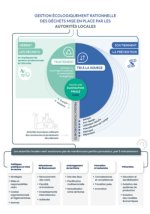
This note presents the support mechanisms for the implementation of effective municipal waste management systems tailored to national and local conditions, ensuring high collection and mechanical recycling rates, while minimizing plastics being littered, landfilled, or incinerated.
The waste management hierarchy states the following three priorities: Priority 1 is given to prevention, i.e. approaches that avoid the generation of waste and reduce the quantity of waste introduced into the (…)
Home > Keywords > Ressources > Technical notes
Technical notes
Articles
-
 The mechanisms that support the implementation of waste management
19 June 2024, by Pauline -
 Technical note: EPR in the Plastic Treaty
15 July 2025, by PaulineAs negotiations progress toward an international legally binding instrument on plastic pollution, including in the marine environment, many national focal points have called for clear and practical guidance on how to establish Extended Producer Responsibility (EPR) systems. In response, the ISWA Working Group on Governance and Legal Issues has developed this technical note — an introductory roadmap outlining key steps and success factors for designing and implementing effective EPR schemes (…)
-
 Article: Energy recovery from waste
14 January, by Lucia LopezThe leading scientific journal “Les Annales des Mines”, which analyzes major issues related to sustainable development, energy, and industrial transformation, published its 121st issue in the “Responsibility & Environment” series in January 2026, coordinated by Catherine Chevauché, a member of the PFD representing Veolia.
This issue, “The circular economy: illustrations and practices" currently available only in french, offers an in-depth and multifaceted exploration of the circular (…) -
 Enhancing landfill efficiency to drive greenhouse gas reduction
30 September 2024, by Pauline’Methane is responsible for around 30% of the rise in global temperatures since the industrial revolution, and rapid and sustained reductions in methane emissions are key to limit near-term warming and improve air quality’ (IEA,2023). This article investigates the pivotal role of non-hazardous waste landfills in achieving greenhouse gas (GHG) reduction objectives within the European Union (EU).
This study leverages the experience of key stakeholders in the European landfilling, assesses (…)
