Product vendors contribute to finance the recycling or final disposal of packaging waste to prevent pollution.
Product Responsibility Organisations are private companies accredited by the State: They have to be controlled by public authorities to ensure equal service to all citizens; They distribute the financial resources to the operators; In the case of Syctom they contribute 11% of the total operating budget (2023)
– https://filieres-rep.ademe.fr/
Home > Keywords > Waste management step > Public policy
Public policy
Articles
-
 Extended Producer Responsibility
21 May 2024, by Philippe -
 Organic waste recovery
24 November 2023, by PhilippeSupporting local authorities to sort, collect and treat domestic food waste.
Mandatory source separation of organic waste as of January 2024: Collection schemes: on-site composting, door-to-door collection, voluntary deposit Targeting 100 kt/year of biowaste collected in the service area Construction of a methanizer on the river port of Gennevilliers by 2026 to produce biomethane and organic fertilizers
– (…) -
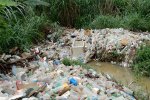 JEAI PADI - Plastics in Abidjan: Future and impacts
21 May 2024, by PhilippeEstablishing scientific knowledge on plastics in aquatic environments.
Tracing back to the cause of macro- and micro- plastic pollution to support decision makers: Research results on lagoon and coastal ecosystems affected by plastic pollution are shared with local stakeholders for their awareness Results are translated into recommendations of operational decision
– https://www.ird.fr/jeai-padi-plastiques-dabidjan-devenirs-et-impacts -
 Civil society, wastewater and solid waste
21 May 2024, by PhilippeCommunity involvement to build resilience.
Involving women and youth in local governance for wastewater and solid waste improvements. Improving the sanitation installations for 3,000 households and 20 schools. Solid waste management services providing: Collection: 90 T/month Engineered landfill disposal: 80 T/month Waste reused & recycled : 10 T/month
– https://gret.org/projet/villes-resilientes-societe-civile-eaux-usees-et-dechets/ -
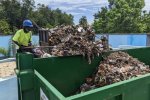 GEDEC Project in Togo
21 May 2024, by PhilippeLocal authorities’ capacity for solid waste and sanitation management.
Solid waste management and fecal sludge management locally tailored systems in 5 municipalities. Co-defining each local strategy with the community Data consolidation Building local autonomy of municipal teams Implementation, monitoring and evaluation
– https://gret.org/projet/gedec/ -
 Promoting integrated solid waste management in Senegal
24 November 2023, by PhilippePROMOGED.
Provide integrated solutions throughout the sector serving 6 million people (2020-2026). Improve the regulatory, financial and fiscal framework of the sector. Develop partnerships between the public authorities and private sector. Rehabilitation of the Mbeubeuss Dakar dumpsite integrating the informal sector. Foster a holistic waste management system.
– https://www.afd.fr/en/ressources/focus-solid-waste-management -
 Strengthening national policies
24 November 2023, by PhilippeWaste management and sustainable financing in insular territories.
A regional initiative leveraging the cooperation between insular countries to prevent marine debris (plastic), used oil, post-disaster waste from degrading the environment: Support local authorities in drawing up comprehensive waste management policies. Strengthen their capacity for action. Improve existing infrastructures by setting up pilot projects. Promoting sustainable financing.
– (…) -
 ALISOTA - Coordinated solid waste and wastewater management
21 May 2024, by PhilippeBuilding local capacities through community involvement in Madagascar.
A project methodology that builds long term capacities and offers research materials. Local strategy implemented to collect and treat waste as well as improve access to sanitation Valorisation of organic waste and faecal sludge to produce biogas
– https://gret.org/a-madagascar-de-nouvelles-perspectives-pour-la-gestion-des-dechets-urbains/ -
 Open-data on operations
21 May 2024, by PhilippeBuilding trust through public access to environmental and financial data.
Open-access to financial and environmental data on solid waste management activities ensures transparency. Publishing data on the environmental impact of facilities is a regulatory requirement for all industrial installations. By publishing data in open data format, the open access principle can be respected
– Open Data - Syctom -
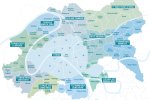 Land planning across scales in the greater Paris area
21 May 2024, by PhilippeKeeping waste generation and waste treatment capacities in balance .
Master-planning at regional and local scale is regularly revisited. National strategy guides regional waste targets. Syctom bridges the regional targets with local planning through “objectives contracts” adapted to each local context. Reducing waste volumes and meeting recycling targets requires integrating economic, social and transport planning.
– Syctom’s Objective Contracts with its members
